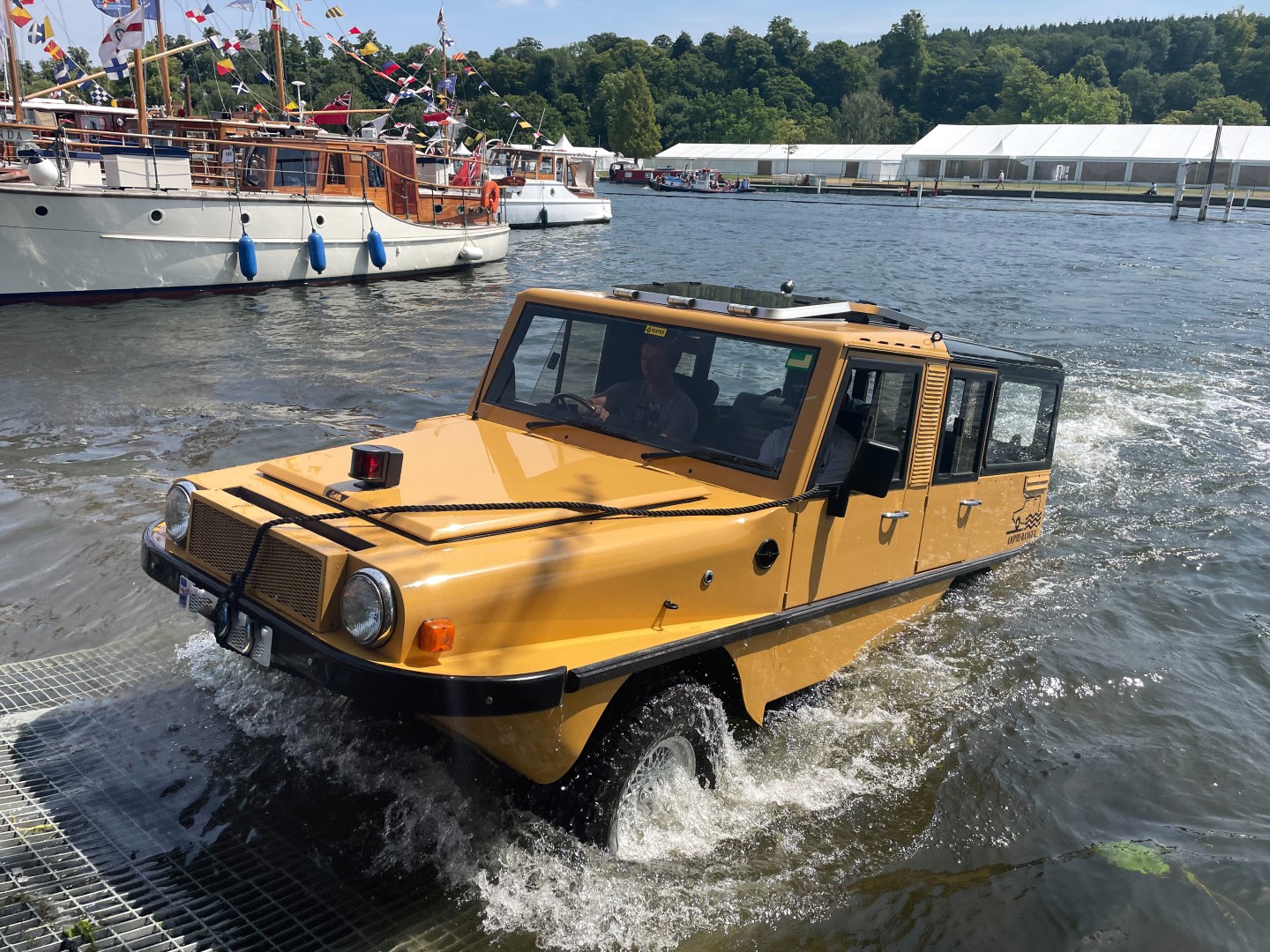
RMA Amphi-Ranger
Weird Car of the Day #495: 1985 RMA Amphi-Ranger – A floater


We're going to go off the beaten path with this one, then straight into the nearest canal for a dunk.
It's easy to forget, if you live in a well-resourced country, that things like water, power, and sewage just sort of sort themselves out. Beyond the network of pipes and wires in your residence, there's a larger network under your neighbourhood, city...but beyond that, it's tough to conceive of exactly all of our utilities are interconnected.
In the case of things like pipelines and power lines, they're tended to by small groups of tradespeople, often with specialized equipment for maintaining infrastructure way out in remote areas.
Germany's Rheinauer Maschinen- und Armaturenbau KG, or RMA for short, recognized that there was a need for a truly rugged, go-anywhere amphibious SUV that could be taken deep into remote areas and allow a small crew of workers to get a job done.
And so the Amphi-Ranger became a sort of side project for RMA, whose production line consisted of pipeline fittings and equipment—ball valves, fasteners, gas meters—the hearty components needed to maintain vast amounts of infrastructure.
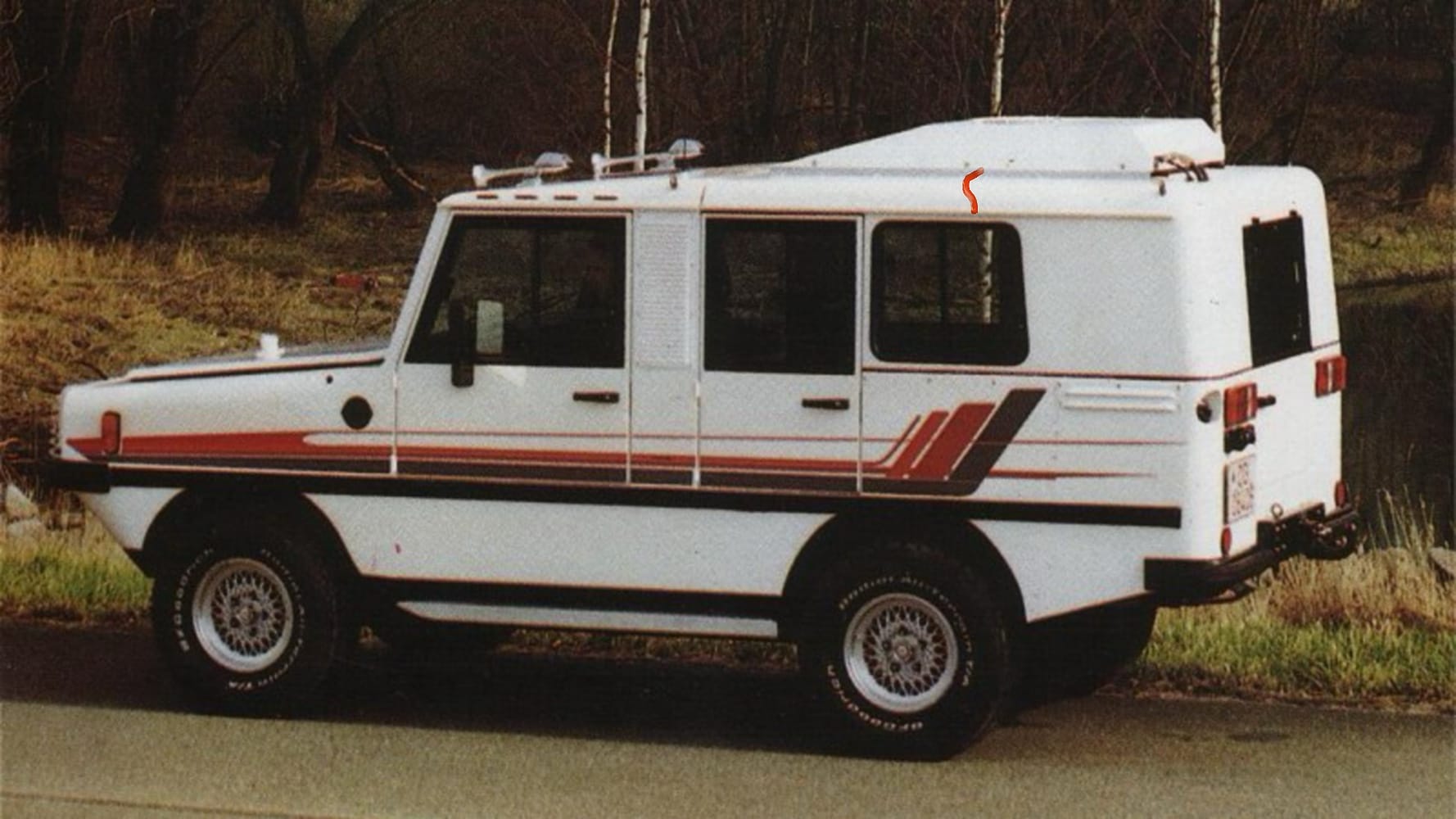
The company realized that, as an amphibious vehicle, the Amphi-Ranger would make a lot more sense if designed and built from scratch. Think of any time Top Gear tried to modify a road car to perform well on water: there's more to it than building a hull, mounting a propeller, and hanging a few nautical bumpers over the side.
It's the little stuff—steering arms, suspension components, brakes, etc.—that becomes much easier to manage if it's designed from the start to be used in an amphibious vehicle.
Production of each finished Amphi-Ranger took about a month. From its seawater-resistant aluminum-alloy hull to its simple selection of Ford engines, it was designed to be strong and relatively lightweight.
First introduced in 1985, the Amphi-Ranger 2000 SR was fitted with a 2.0-litre four-cylinder engine making 100 horsepower. That was connected to a four-speed transmission and two-speed transfer case with a power take-off for operating equipment in remote areas.
At 1,650 kg (3,637 lbs), the truck wasn't a total heavyweight—but with just 100 horsepower, there was no way operators could hope to keep up with traffic on the motorway.
By 1986, the weight had increased to 1,940 kg (4,321 lbs), but the Amphi-Ranger now had an extra forward gear and a 3.0-litre V6 with 145 horsepower. Its top speed on land was 140 km/h (87 mph), and in water, 15 km/h (9.3 mph, or about 8 knots).
The company said Amphi-Ranger operators now had a range of 450 km on land, while the vehicle could operate in water for up to 20 hours and carry a load of 860 kg (1,895 lbs).
Most were sold to industrial companies and government agencies—including police—but some were bought by private individuals. RMA even offered a choice of soft or hard top.
Creature comforts? Probably "It floats!" is at the top of the list, right? As the video below briefly shows, inside there's a lot of black plastic, rubber, and metal.
Under the rear bumper hides a retractable electric propeller that's deployed once there's enough water underneath the vehicle. Once afloat, the front wheels act as rudders.


Production ended in 1995, with somewhere between 66 and 85 Amphi-Rangers completed, each differing according to its intended use. Of course, limited production and immensely specialized construction conspired to make the Amphi-Ranger expensive, with the most recent "new" sticker price listed at more than $100,000 USD.
During my initial research more than a decade ago, I came across a page for Interessen-Gemeinschaft Amphi-Ranger (IGAR), a small group of owners trying to band together and support the continued use of their beloved amphibious vehicles.
Like so many of the cars featured here, even an amphibious pipeline-maintenance vehicle can develop a following.
Lucky owners have long been worried about keeping them running. Each vehicle was handmade and unique, maintenance was complicated, and spare parts are becoming increasingly difficult to find. With RMA having ended production decades ago, Amphi-Ranger caretakers around the world can only hope to unite and solve their problems together.
Let's hope there are enough enthusiasts around to keep the Amphi-Ranger hobby afloat…
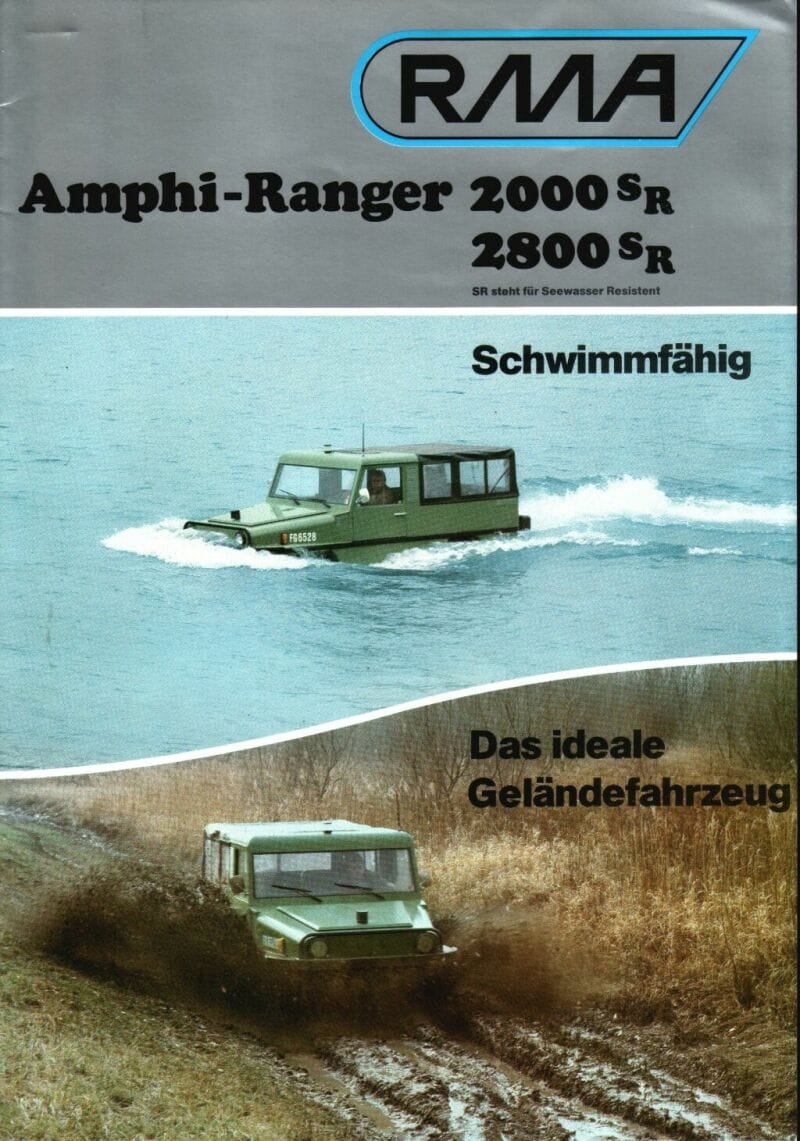
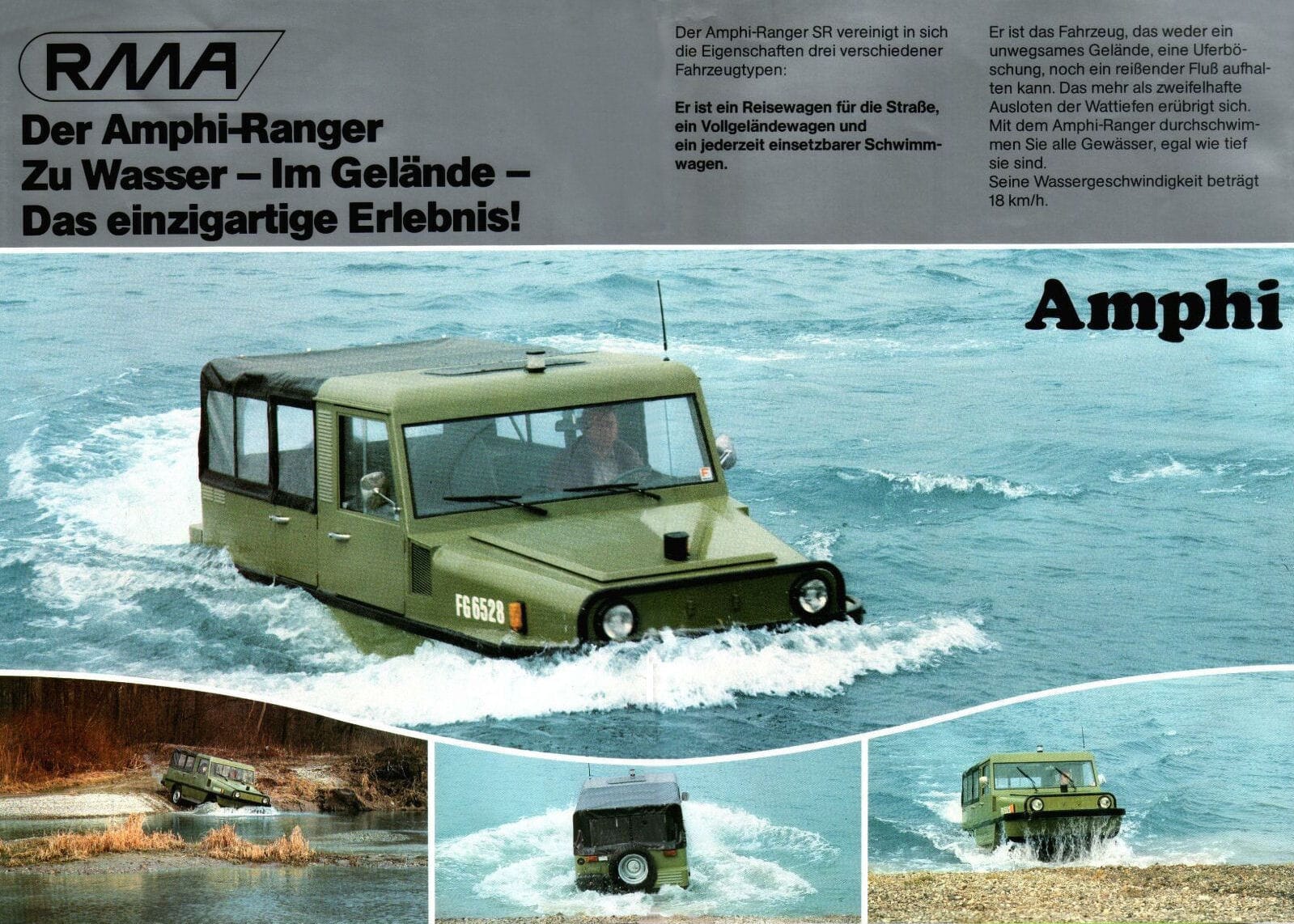
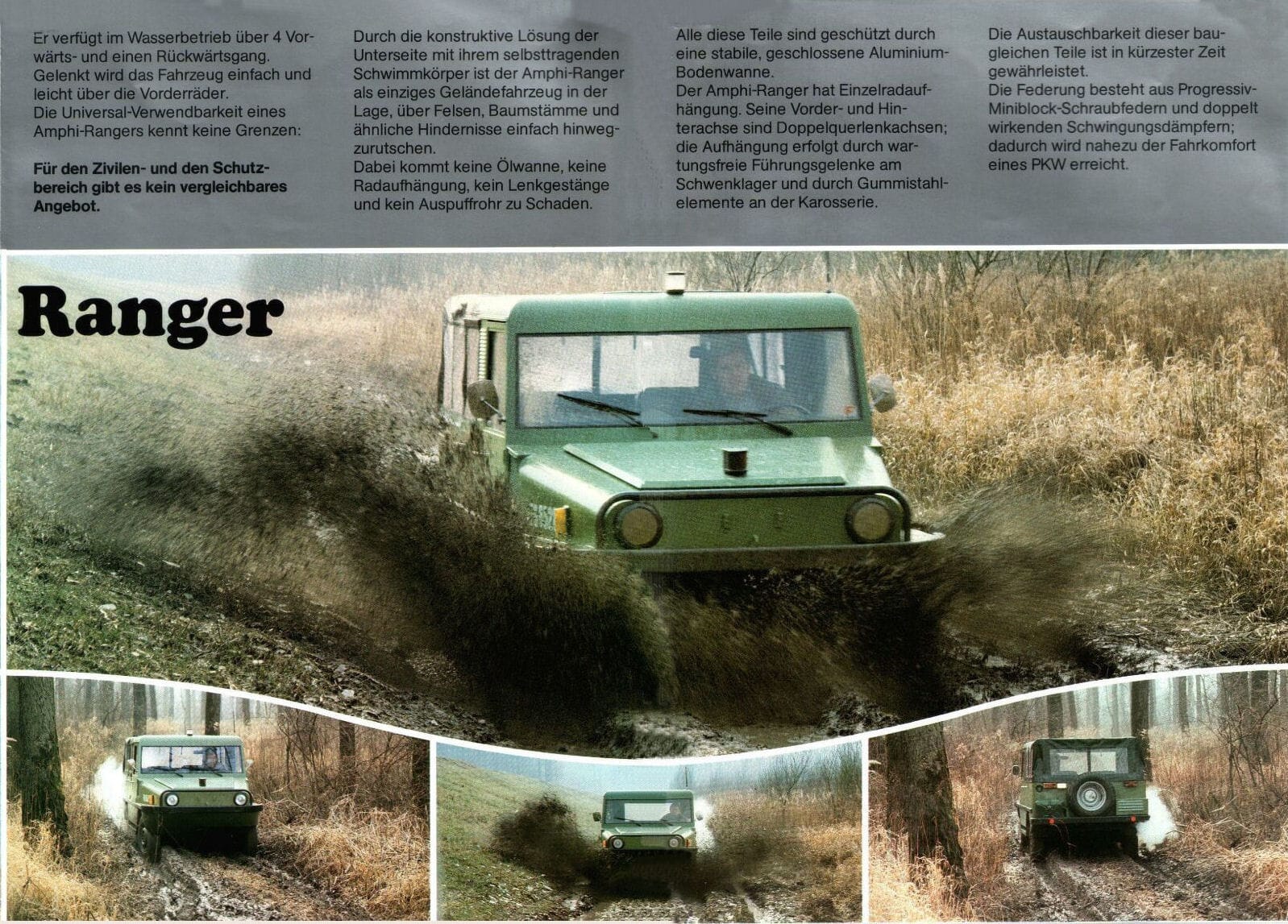
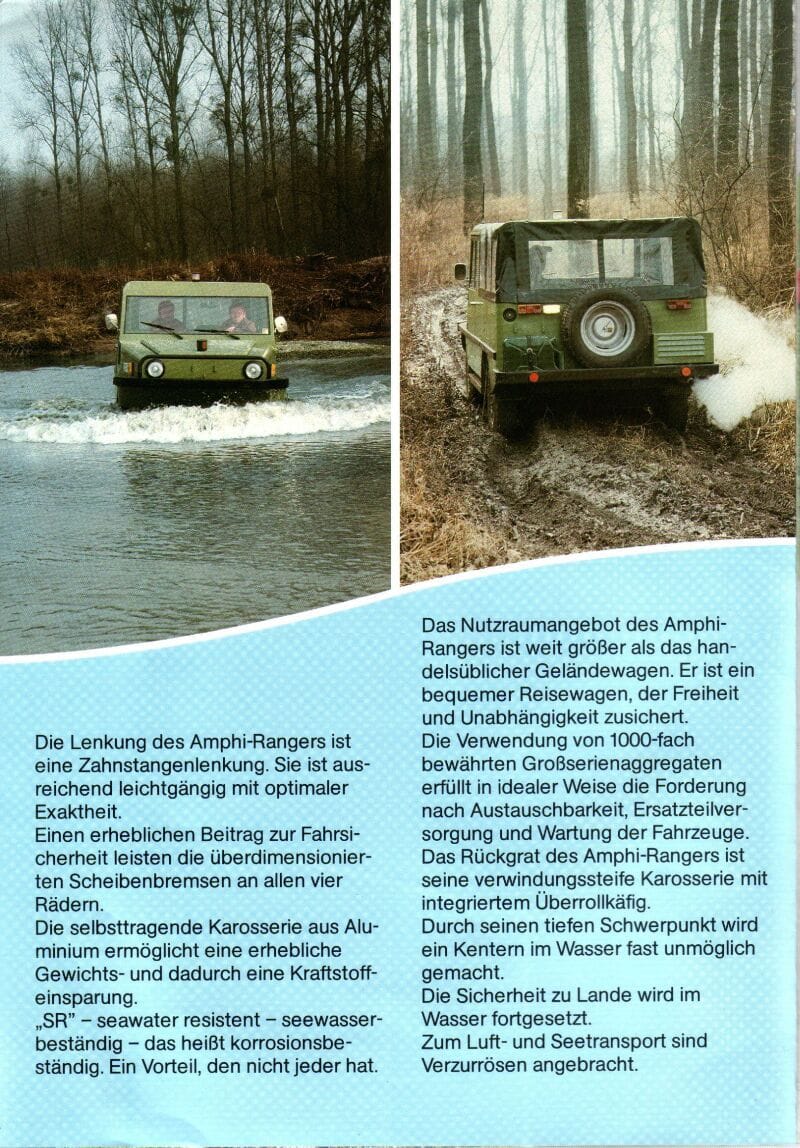
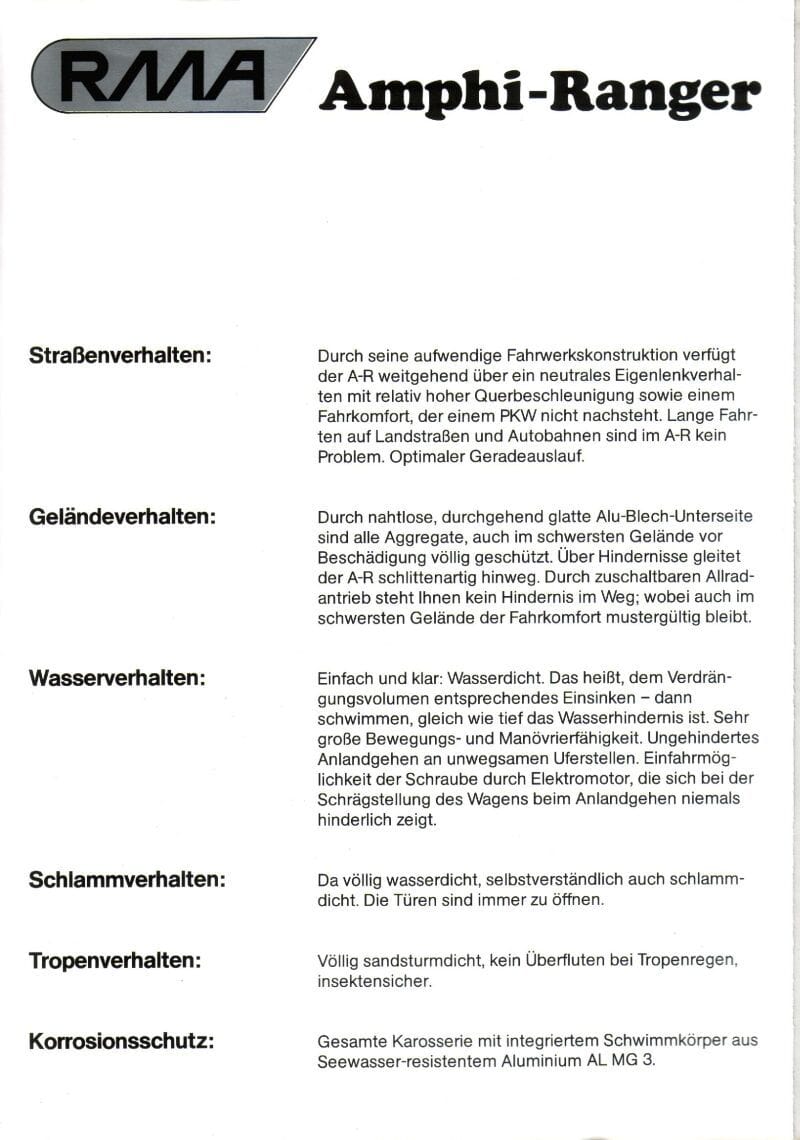
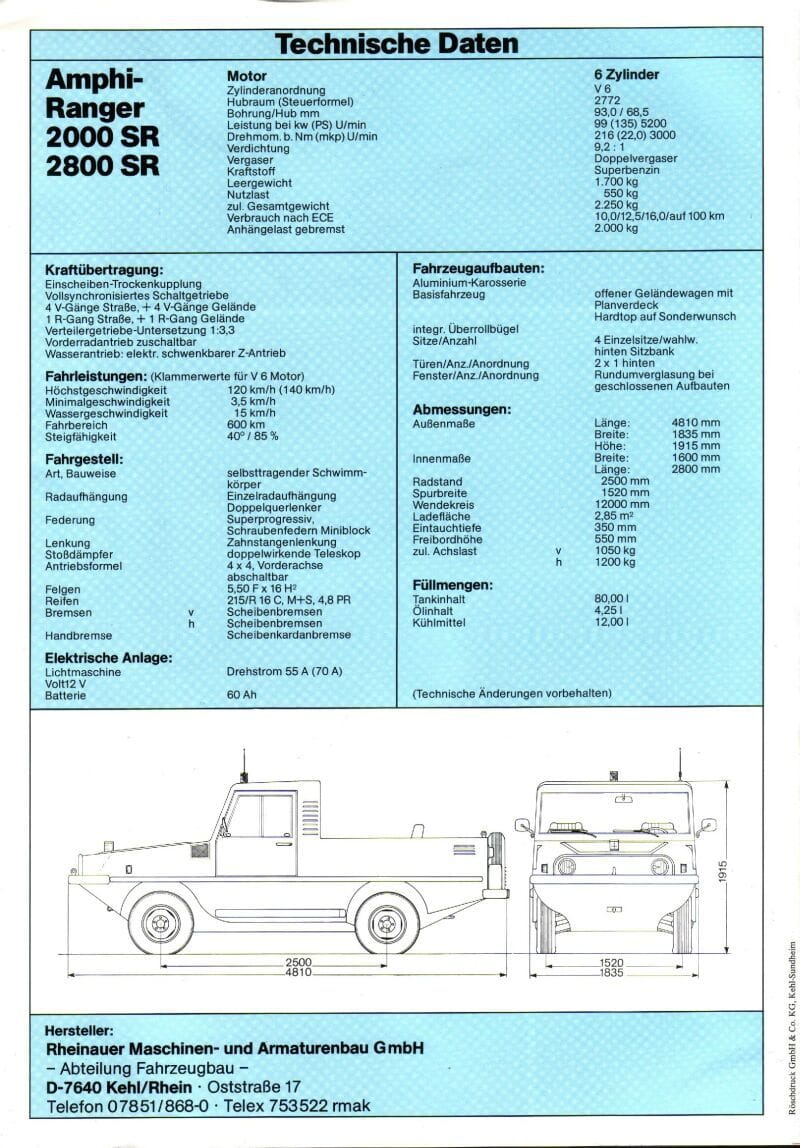
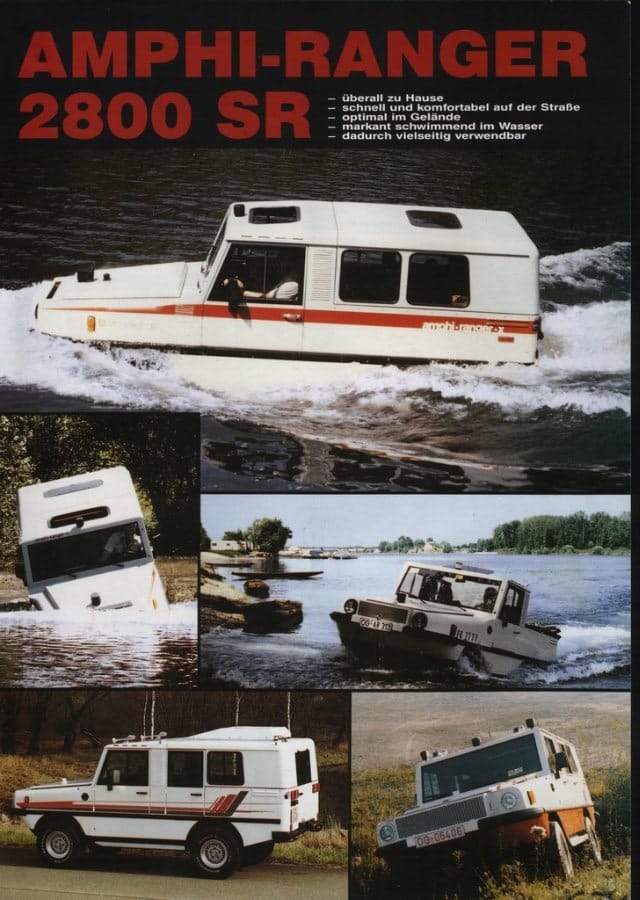
Various official Amphi-Ranger brochures showing various specifications • RMA, oldcarmanualproject.com
Sources

 Paul Clément-Collin
 Autoren der Wikimedia-Projekte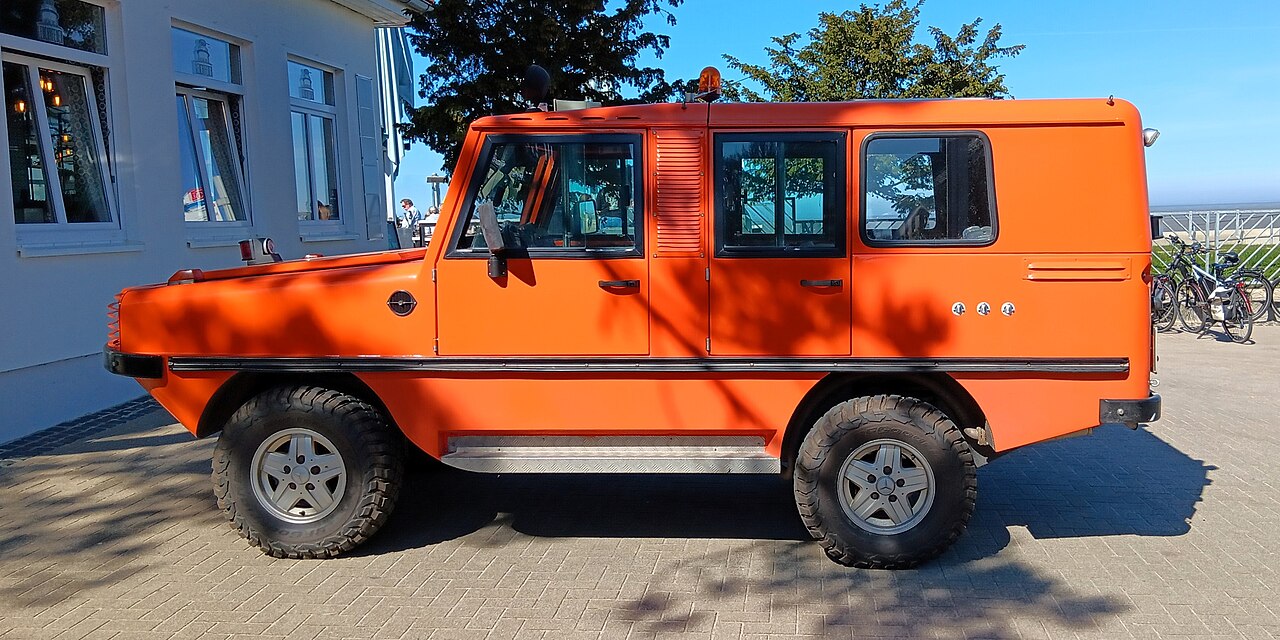
- Example for sale in U.S. cited by Racer.com / Mecum Auctions: https://racer.com/2026/08/27/this-suv-you-ve-never-heard-of-will-drive-you-crazy
 Ben Branch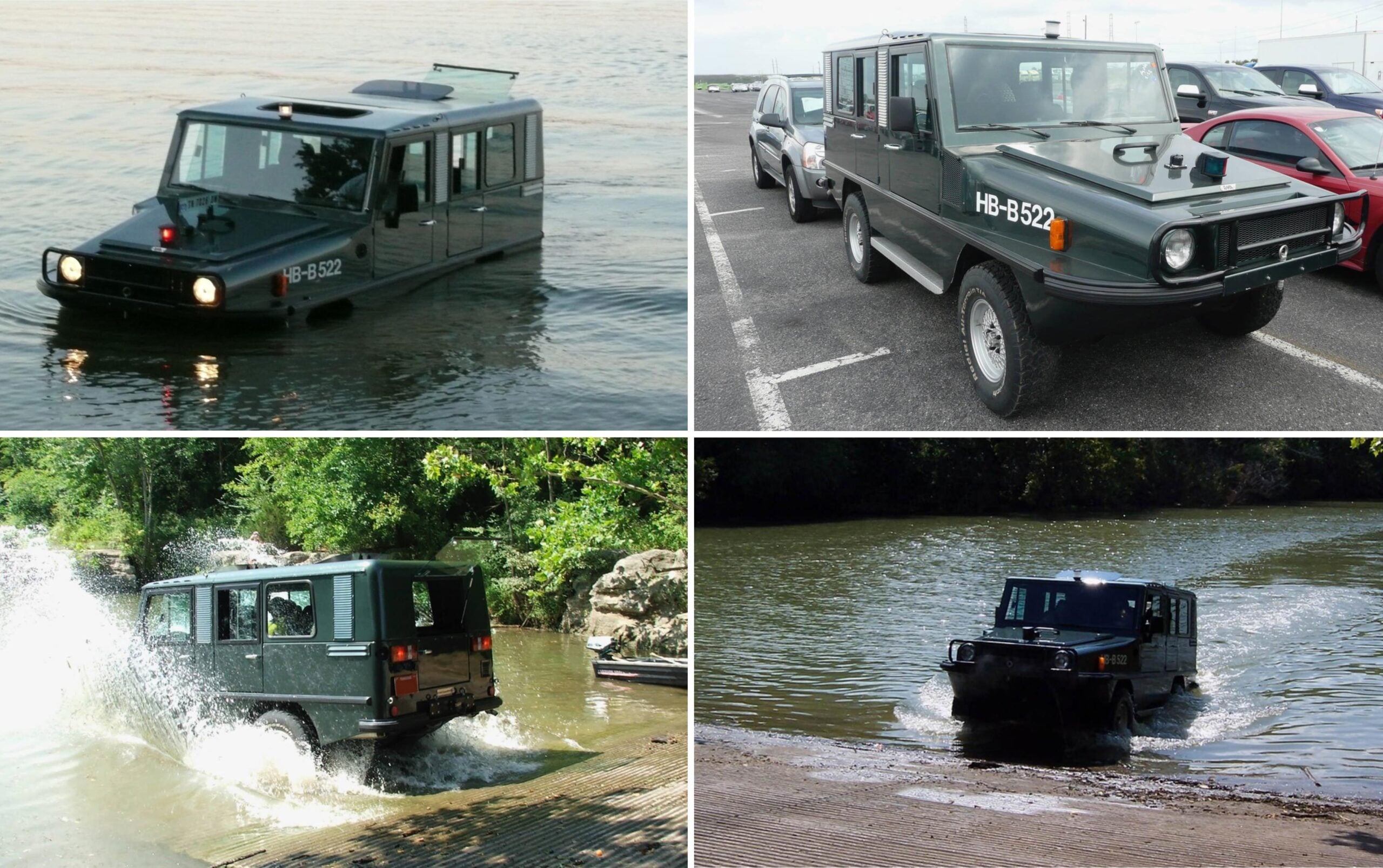


 Zircotec Motorsport