Diamond T Doodlebug
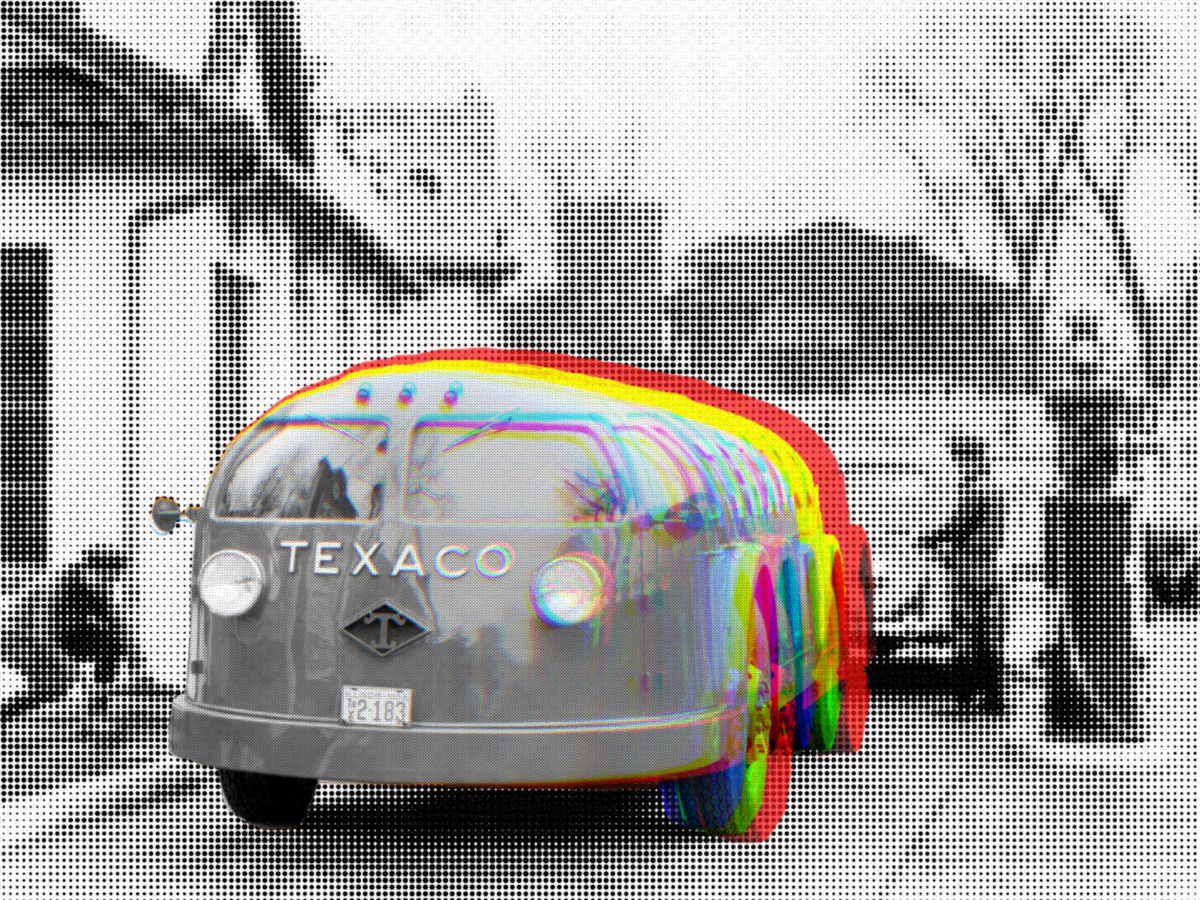
Weird Car of the Day #467: 1933 Diamond T Doodlebug by The Heil Co. – Iron pill

One of the best things a person interested in vehicles can do is read Horizons by Norman Bel Geddes, the vaudeville magician, stand-up comic, theatrical set designer, and industrial designer. Born in 1893, he lived at a moment when the concept of speed was just beginning to seize the American imagination—and made a career of designing what this fantastic future ought to look like.
Horizons (linked below to read for free thanks to The Internet Archive) contains plenty of observations that now seem outdated, but it is beautifully illustrated and capable of sending you decades into the past. It was looking forward, naturally, to the year 2000, when we would all be commuting in flying cars.
Bel Geddes designed Futurama, General Motors’ pavilion for the 1939 World’s Fair. He designed cocktail shakers, teardrop cars, rotating airport layouts (as in, the entire airport moved in place, like a lazy Suzan or roundhouse for trains), and even penned the case that housed the Harvard Mark I, one of the world’s first electromechanical computers. Take that, Jony Ive.
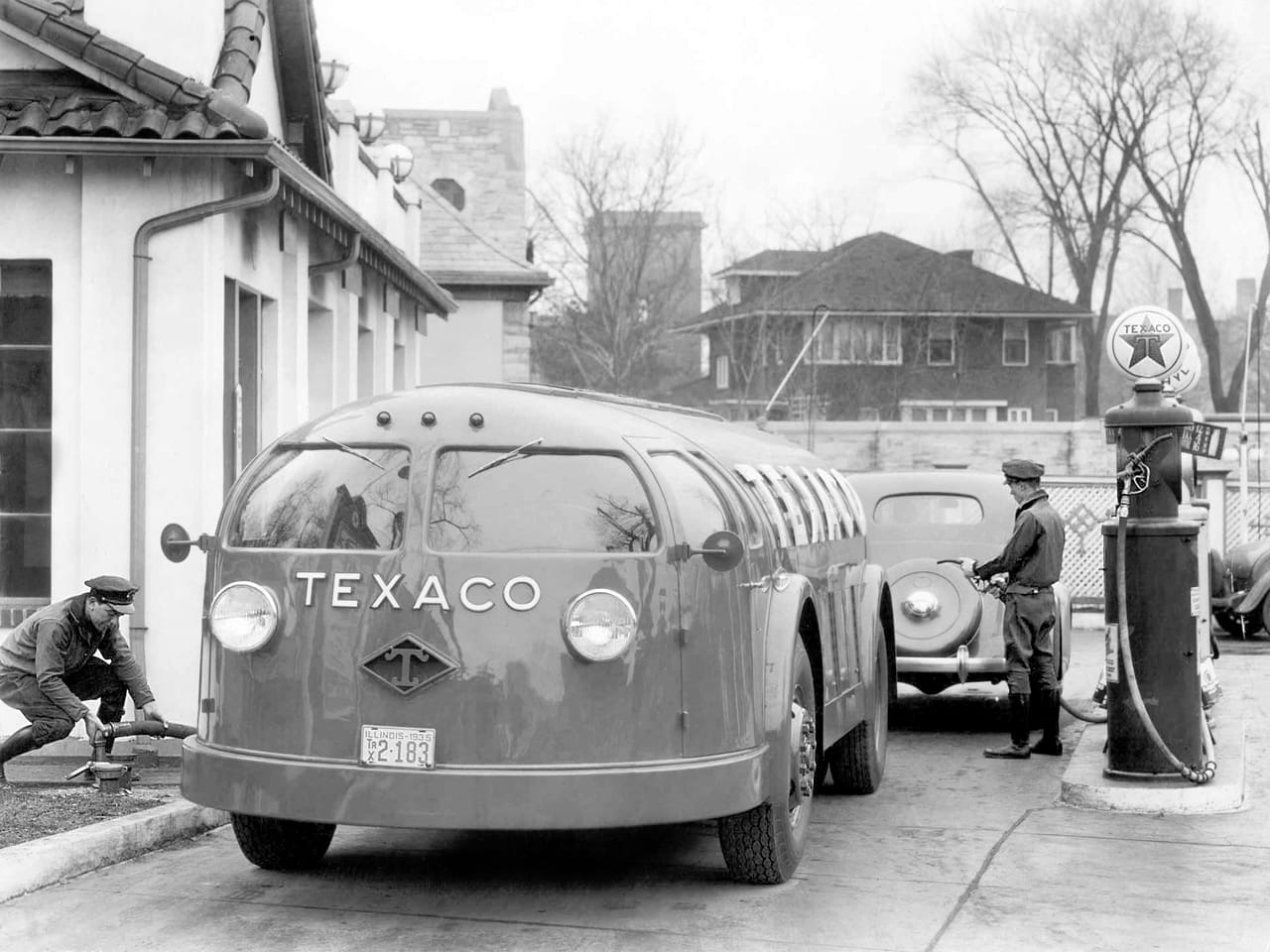
His influence was so broad that many consider him one of the architects of what we now recognize as American design. It was this eye for the fantastic that drew the petroleum giant Texaco to his firm.
Marketing gasoline (or, rather, a particular brand of gasoline) is largely a matter of perception. Texaco understood this. It was already cultivating an image of technological progress through its stations, uniforms, pumps, signs, and graphic identity. Such coordination is commonplace now; in 1933, it certainly was not. As Special Interest Autos noted in a 1995 profile of the Doodlebug, Texaco’s fleet was then managed by Howard W. “Zip” Kizer. Since the company was already paying for custom tanker bodies, Kizer wondered, why not make them as eye-catching as possible?
 michael banovsky
If automobiles looked old-fashioned in 1933, with their upright radiators, chunky frames, and cramped, rudimentary cabins, trucks were practically Neolithic. The automobile itself was not yet 50 years old. Most trucking and service companies followed the same formula: buy an engine and chassis from a truck manufacturer, then send them to a coachbuilder to have a body designed and installed.
Pininfarina, whose badge would eventually appear on the side of countless Ferraris, began this way, too: trucks. Founded by Battista “Pinin” Farina, it is one of the few surviving descendants of the classic coachbuilding tradition of helping people get shit done.