Cammus Titan
Weird Car of the Day #462: 2017 Cammus Titan – Sim Real


I've been consistently supportive of China's car industry since, well, forever, because of course the weird car guy would want more manufacturers and variation. Little did I know that to get to where we are in 2026—with more than 500 new models launched in China's home market alone—we'd have to suffer through a few decades of brands taking their marching orders from elsewhere.
Really, by the late 1990s and early 2000s, Mercedes-Benz or Porsche could have built a factory in China to make the most exclusive, high-performance vehicles in their lineups. That you're scoffing at the suggestion is evidence of your unwillingness to handle the truth: China can make sports cars, too.
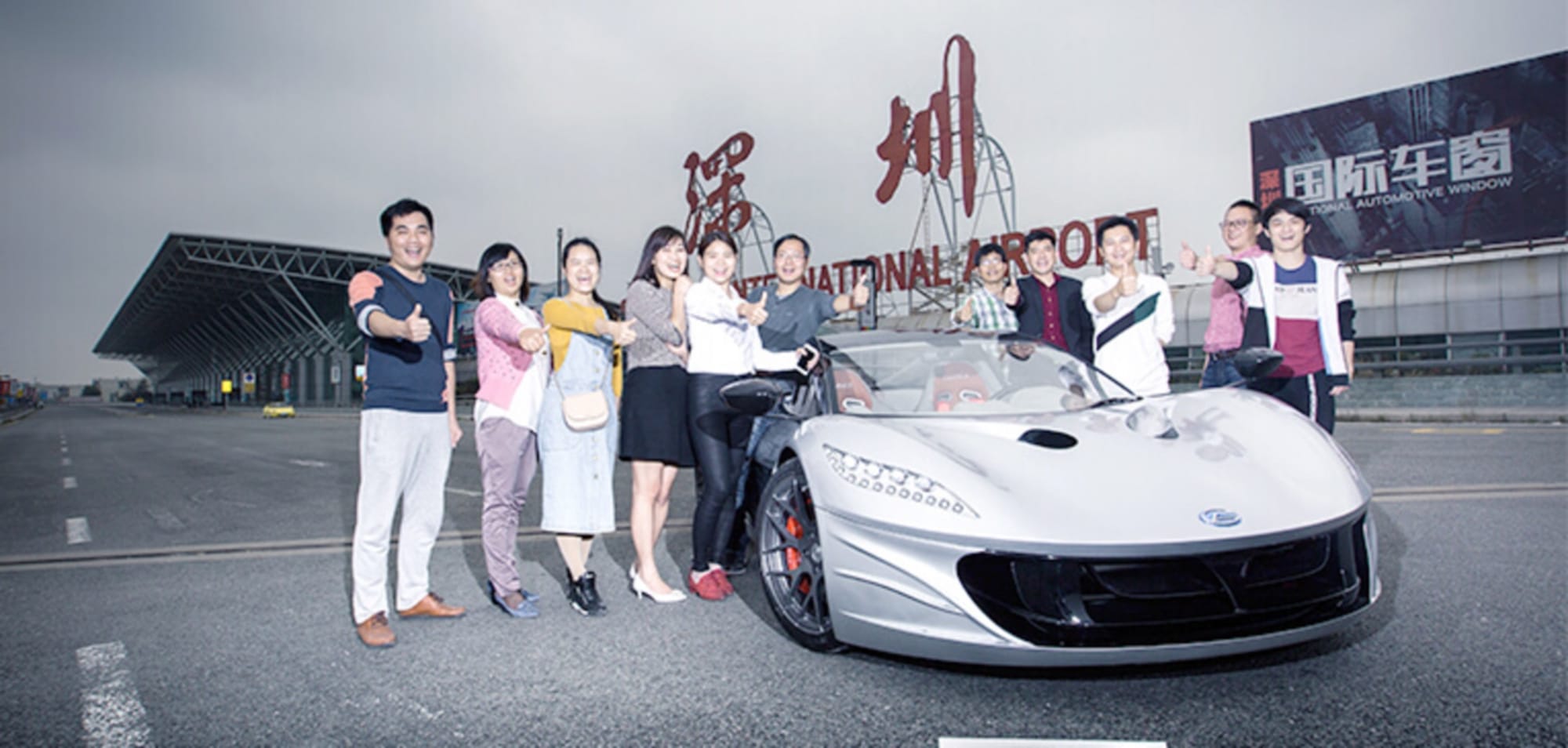
To prove this point, in 2014 PC racing sim accessories manufacturer Cammus decided to take all of what it knew about simulators and do it for real. Wouldn't you know it: by 2016 the small team had built (what is believed to be) China's first electric supercar.
Not from BYD, or YangWang, or Nio, MG, or from any of the other manufacturers currently building world-class sports and supercars.
From Cammus. The budget brand of direct-drive steering wheels that broke, teenaged forum users dunk on.
Given the company's lack of experience, nothing looks that budget from here: steel/titanium frame, dual motor, mid-rear layout, 600v architecture, and carbon fibre bodywork are the headline features. CarNewsChina reported its battery pack is a Panasonic 500V/72 kWh and water cooled, mid-mounted into the original chassis.
Performance? Said to be 544 horsepower, 1000Nm of torque, and 0-100 km/h in 3.9 seconds. Range was up to 400 km, and top speed was 260km/h (161mph). For the 2016-2017 electric supercar era, those numbers are great.
In comparison, the rare (nonexistent?) Audi R8 e-tron posted similar acceleration numbers, albeit with half the torque, less top speed, and no stats on its charging times.
Cammus still hosts the Titan on its website and states plainly: "It takes 1.5 hours to be charged by high-voltage charging pile," or up to seven hours with more conventional means (probably a 220/240v home charger).
Some sources online call it the 'Windbooster Titan'. No notes.
Is the Titan a little outdated today? Sure. Is it a bit homebrew? Absolutely. In fact, the motor and battery pack (of 6,000 individual cells) were hand-assembled. The instrument cluster runs Android OS, and all software was developed in-house. In all, a team of as many as 40 people worked on the Titan.
Is it an achievement? Undoubtedly. Based on a translation of the video linked below, the company only encountered difficulties, "never ease" through the development process, including an accident where the electric motor exploded, melting its innards.